
The Signs of a Bad Mechanic (Not Just a Dishonest One)
October 15, 2026 (Updated October 17, 2026), VIPCANIC Auto Repair
By Anthony Limpert, ASE Business Built With Master Automotive Technicians
Key points
- A bad mechanic is not always a crook. Sloppy work is its own problem, and it shows up after you drive away
- Before the job, watch for phone diagnoses, no written estimate and no registration number
- During the job, watch for one part after another with no test in between
- After the job, do a comeback check in the first few days, while the repair is fresh
- Certification helps, but the FTC says it does not guarantee trustworthy work, so judge the work too
Bad and Dishonest Are Not the Same Thing
We fix a lot of other people's repairs. A car comes to us with the same warning light the last shop "fixed" two weeks ago. Or a new noise that was not there before the brake job. Most of the time, nobody lied to that owner. Somebody just did the job badly.
That matters, because almost every article on this question is about scams. Scare tactics, fake upsells, padded bills. Those are real. But the numbers say the fear of bad work is nearly as big. In AAA's survey, about two in three U.S. drivers said they do not trust repair shops in general. Their reasons were unneeded work (76%), overcharging (73%), a bad past experience (63%) and worry the work will not be done right (49%) (AAA Newsroom, December 1, 2016). It is the newest national trust survey AAA has put out that we could find, so read it as a ten year old snapshot.
So we split the signs into three times you can catch them. Before anyone touches the car. While the work is going on. And in the first few days after you get it back.
Signs Before They Touch the Car
- They diagnose it over the phone. "Sounds like your alternator" is a guess. A good mechanic tells you what test they will run to prove it, and what that test costs.
- They will not say what the diagnostic fee covers. The FTC tells drivers to ask how a shop prices labor and whether there is a charge for diagnosis if you take the work somewhere else (FTC, Auto Repair Basics). A good shop answers that in one breath.
- No written estimate. In California this is not a nice extra. The Bureau of Automotive Repair says the estimate must describe the job and price the parts and labor, and your signed and dated OK has to be on record before any repair starts (BAR, Write It Right, updated January 2026).
- No registration number. Every repair dealer in California has one, and it goes on your invoice. If they cannot give it to you, look the business up on the state license search before you hand over keys.
- They have never worked on your kind of car and will not say so. The FTC suggests asking if the shop has worked on your make and model. "Not much, but we can" is a fair answer. A shrug is not.
- They cannot tell you what can wait. A good mechanic sorts the list into now, soon and later. A bad one says everything is urgent, or says nothing at all.
Signs While the Work Is Going On
This is where a bad mechanic costs the most money, and it rarely looks like a scam. It looks like trying hard.
- The parts cannon. They replace a part, it does not fix it, so they replace the next one. Each part costs you. A real diagnosis tests the circuit or the sensor first and changes one part with a reason.
- The scope creeps without a call. In California, if the shop finds more work, they need your OK before they do it. A bad shop does the extra work and tells you at pickup.
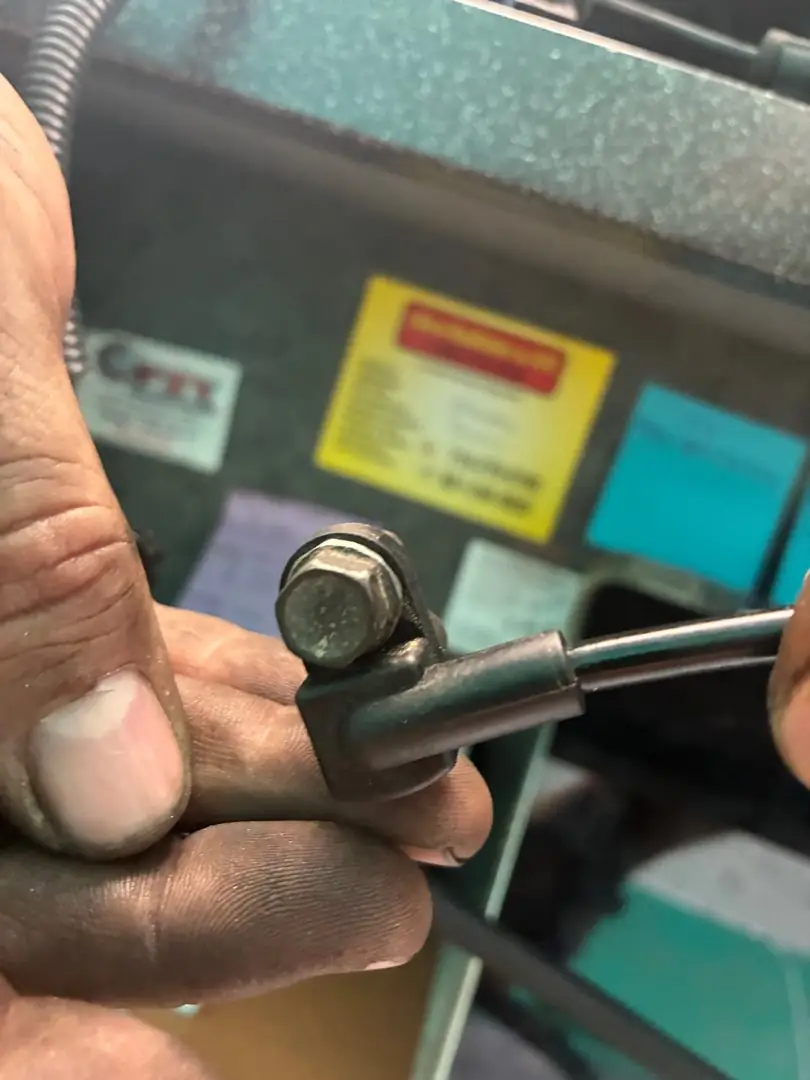
- No proof. A good mechanic shows you the failed part, in person or in a photo. Like the one below. If they cannot show you what failed, ask why.
- The story keeps changing. First it was the battery. Now it is the starter. Then the wiring. Diagnosis can take turns, but each turn should come with a test result, not just a new guess.
Signs After the Job, and the Comeback Check
A lot of bad work does not show up in the shop. It shows up on the drive home, or three days later in your driveway. Do this check in the first week, while the repair is fresh and easy to bring back.
| Check | When | What a Bad Job Looks Like |
|---|---|---|
| The original problem | First drive | Same noise, same light, same feel. The fix did not fix it. |
| Warning lights | Every start for a week | A light that was off before is now on |
| The ground under the car | Next morning | Fresh drips where there were none |
| Wheels, if they came off | First few miles | Clicking, a wobble, or a pull that was not there |
| Under the hood | Next day, engine cold | Loose covers, a cap left off, a clip hanging, fluid low |
| The cabin | Pickup | Grease on the seat or wheel, settings changed |
| The invoice | Pickup | Parts or labor you never approved, or no registration number |
| Your old parts | Pickup | You asked for them and they are gone |
On old parts, California law is clear. If you ask for your replaced parts when you sign the estimate, the shop has to give them back. Core parts and some warranty parts go back to the supplier, but you still get the chance to look at them (BAR, Write It Right). Ask up front. It costs nothing, and it keeps everyone straight.
One more sign is how they act when you come back. A good mechanic owns a miss and makes it right. A bad one argues, blames the part, or stops picking up.
What Certification Does and Does Not Tell You
ASE certification means something. To earn it, a tech has to pass an ASE test and have real hands-on work time, one to three years for a repair tech depending on the test. The credential lasts five years, and then they have to retest (ASE, Work Experience Requirements). A shop with the Blue Seal has at least 75% of its techs certified, and every kind of work it offers covered by at least one certified tech (ASE, Blue Seal).
Now the limit. The FTC says to check that certifications are current, and it also says plainly that certification does not guarantee trustworthy work. A certificate on the wall tells you someone passed a test once. The signs above tell you how they work on your car today. Use both.
In California the license is the one that is required. The Bureau's consumer page says licensed shops are registered and have to follow the laws that protect you, and you can look up a shop's history with the state (BAR, Maintenance and Repairs).
What to Do When a Repair Did Not Fix It
- Go back fast. Call the shop that did the work first. Most comebacks get fixed this way, and it is the fastest route.
- Write it all down. Dates, times, names, what was said, what you paid. The FTC says to keep this record from day one.
- Talk to the manager or the owner. Not the person at the counter. Bring the invoice.
- Get a second opinion in writing. If another shop finds the old work was wrong, ask them to write down what they found.
- File with the state. If you cannot settle it with the shop, you can file a complaint with the Bureau of Automotive Repair. It says it will look into it and help mediate.
- Small claims is there. The FTC notes you can file in small claims court without a lawyer.
Bad Mobile Mechanic Signs
We are a mobile shop, so we will say this part straight. A truck in your driveway follows the same rules as a garage. In California, a mobile invoice has to show the address where the work was done, and you get the same written estimate and the same registration number (BAR, Write It Right). A mobile mechanic who wants cash, gives no paper and has no registration number is a side job, not a repair business. That may be fine for an oil change. It is a bad bet for brake repair. We wrote up the real drawbacks of mobile repair and what a private mechanic should cost if you are weighing the two.
Where We Land
Do not just ask "is this guy a crook." Ask "can this guy prove what is wrong, and will he stand behind the fix." A good mechanic tests before buying parts, shows you the failed one, puts the price in writing and answers the phone when you come back. If a check engine light or a no-start is what you are dealing with, start with a real diagnostic, not a guess.
The Questions That Keep Coming
How do you know if a mechanic is being straight with you?
A good mechanic shows you the failed part or a photo of it, gives you a written estimate before work starts, and calls you before doing anything extra. In California, the written estimate and your signed OK before repairs are required by law.
How long should it take a mechanic to diagnose a problem?
A code read takes minutes, but a code is not a diagnosis. Testing the circuit or part behind the code takes longer, and electrical or on and off problems can take an hour or more. A good mechanic tells you up front how long the testing will take and what it costs.
What is a parts cannon mechanic?
It is a mechanic who replaces parts one after another until the problem goes away, instead of testing first. You pay for every part that did not fix it. Ask what test proved a part failed before you approve it.
Can I ask for my old parts back?
Yes. In California, if you ask when you approve the estimate, the shop has to return your replaced parts. Core and some warranty parts go back to the supplier, but you still get to inspect them.
What should I do if my car has the same problem after a repair?
Go back to the same shop first and bring the invoice. Keep a record of dates, names and what was said. If you cannot settle it, you can file a complaint with the California Bureau of Automotive Repair or go to small claims court.
Does ASE certification mean a mechanic is good?
It means the tech passed an ASE test and had real work time, and it has to be renewed every five years. The FTC says certification does not guarantee trustworthy work, so judge the work itself too.
VIPCANIC runs licensed mobile mechanics out of Hawthorne and Torrance, 24 hours a day. Every job is quoted before work starts, and we show you the worn part before we replace it. (310) 340-6775.
Anthony Limpert is a co-founder and lead technician at Supercanic, the parent company behind VIPCANIC.
Like our car repair posts? See more of them when you search.
Star VIPCANIC as a source in GoogleLinks and Records
AAA Newsroom, Most U.S. Drivers Leery of Auto Repair Shops, December 1, 2016
Federal Trade Commission, Auto Repair Basics
California Bureau of Automotive Repair, Write It Right, updated January 2026
California Bureau of Automotive Repair, Maintenance and Repairs (consumer rights)
ASE, Work Experience Requirements
ASE, Blue Seal of Excellence Recognition Program
California Department of Consumer Affairs, License Search
Stranded, stuck, or just done with repair shops?
One call and a VIPCANIC mechanic is on the way. 24 hours a day, anywhere in the South Bay.
Call (310) 340-6775